
15
Melvor Idle
8.5/10Idle RPGBrowserPCMobileBuy to play2021
RuneScape's skill list, rebuilt as an idle game, and better for it.
Rank01
Idle Games
An idle MMORPG where your crew mines while you sleep and the money on the table is USDT.

The world
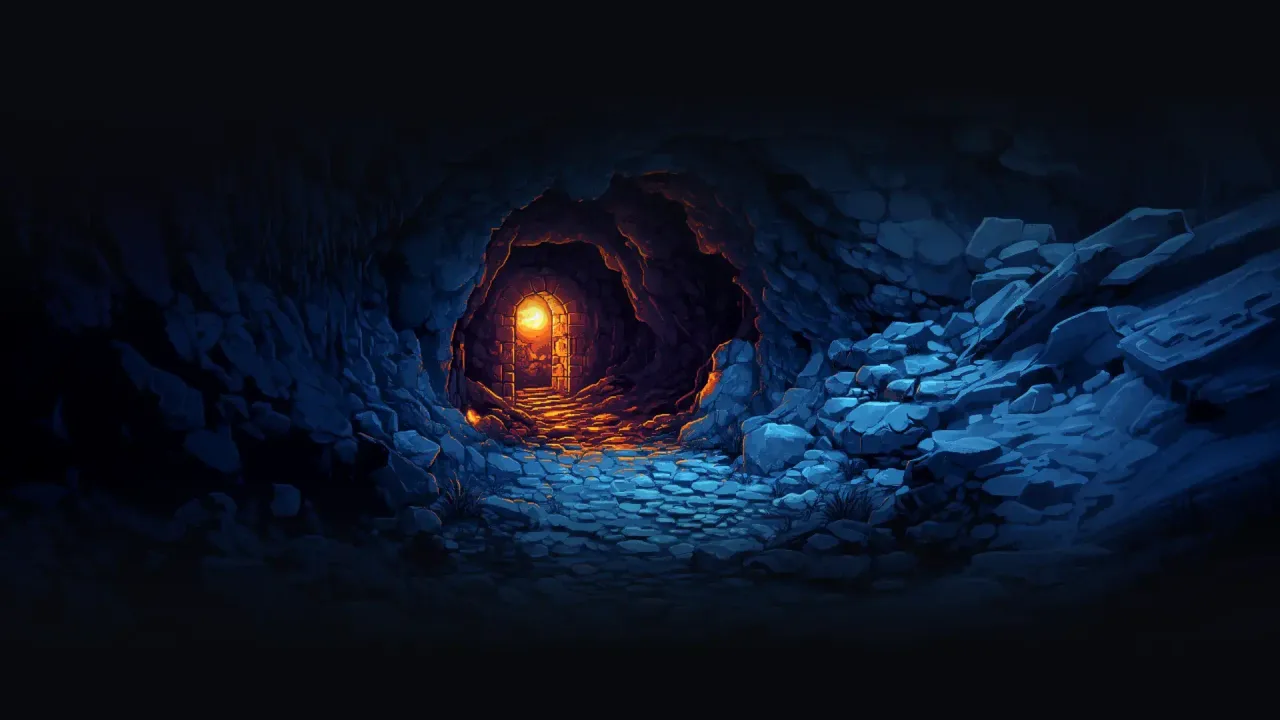
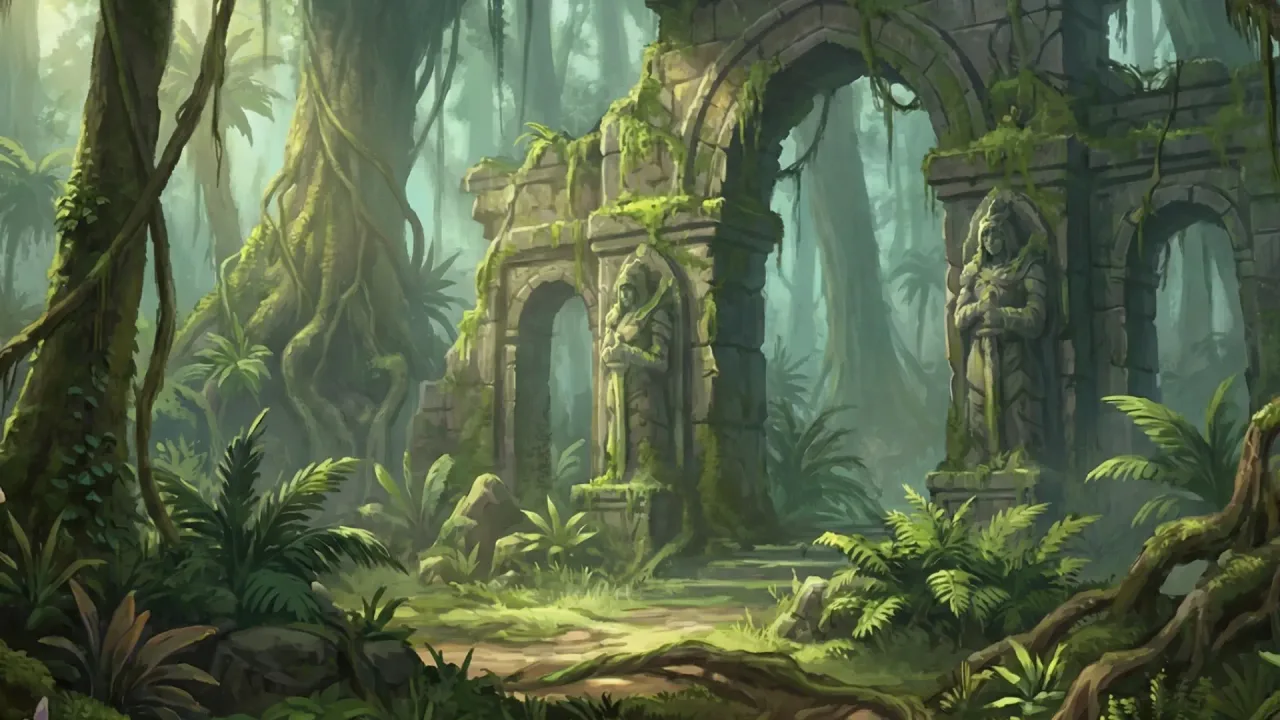
Every account opens in the Plaza, and it is deliberately unimpressive. Two workers, a starter pickaxe, and a view across four regions nobody has finished claiming. Everything above ground was settled generations ago. What is left is underneath, and it gets meaner the further down you go.
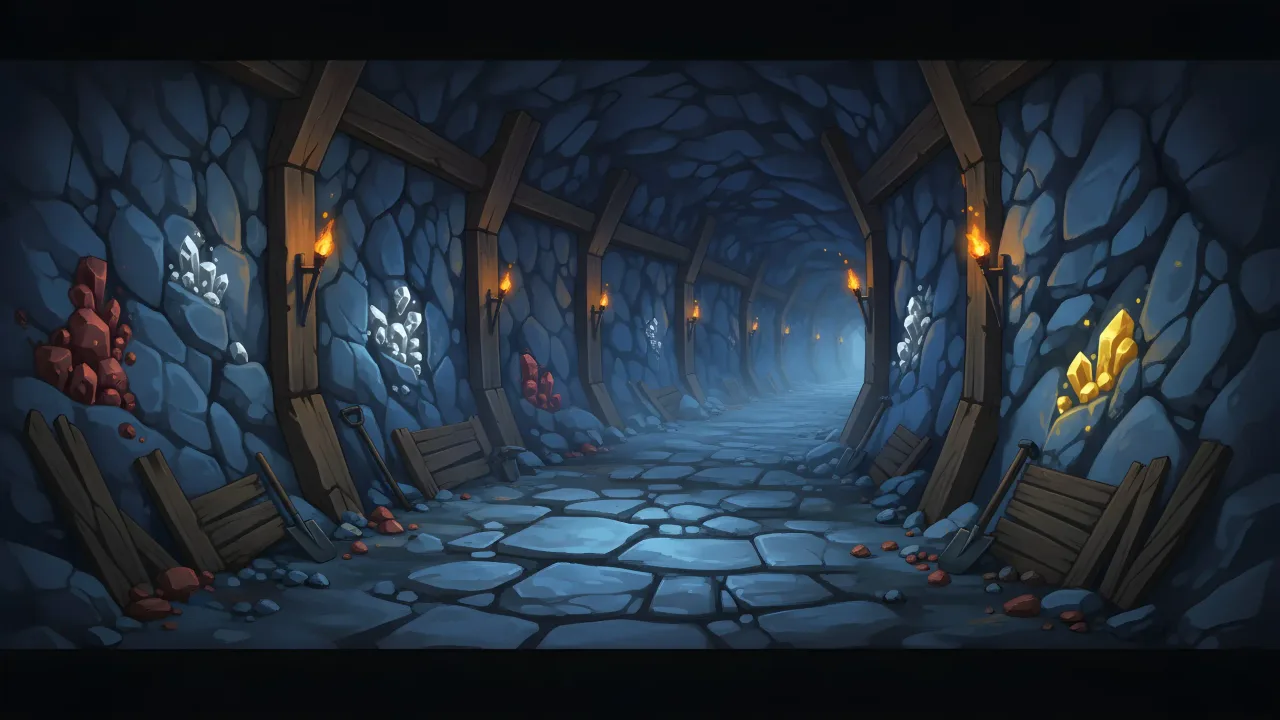
The Deep Shafts begin at Surface Works, a floor so shallow your day-one workers can run it forever on nothing but time. Below that the mines stop being generous and start asking for food and water. The Wildlands hold the groves, from the Outer Forest through the Deep Woods to the Primeval Thicket, where the wood that actually matters grows. The Deep Seas run from the calm Riverlands out to trenches with things living in them. Then there are the Blood Halls, which produce nothing at all. They are simply where Vorthuun, Warden of the Void, waits once a month for whatever army the server can assemble against him.
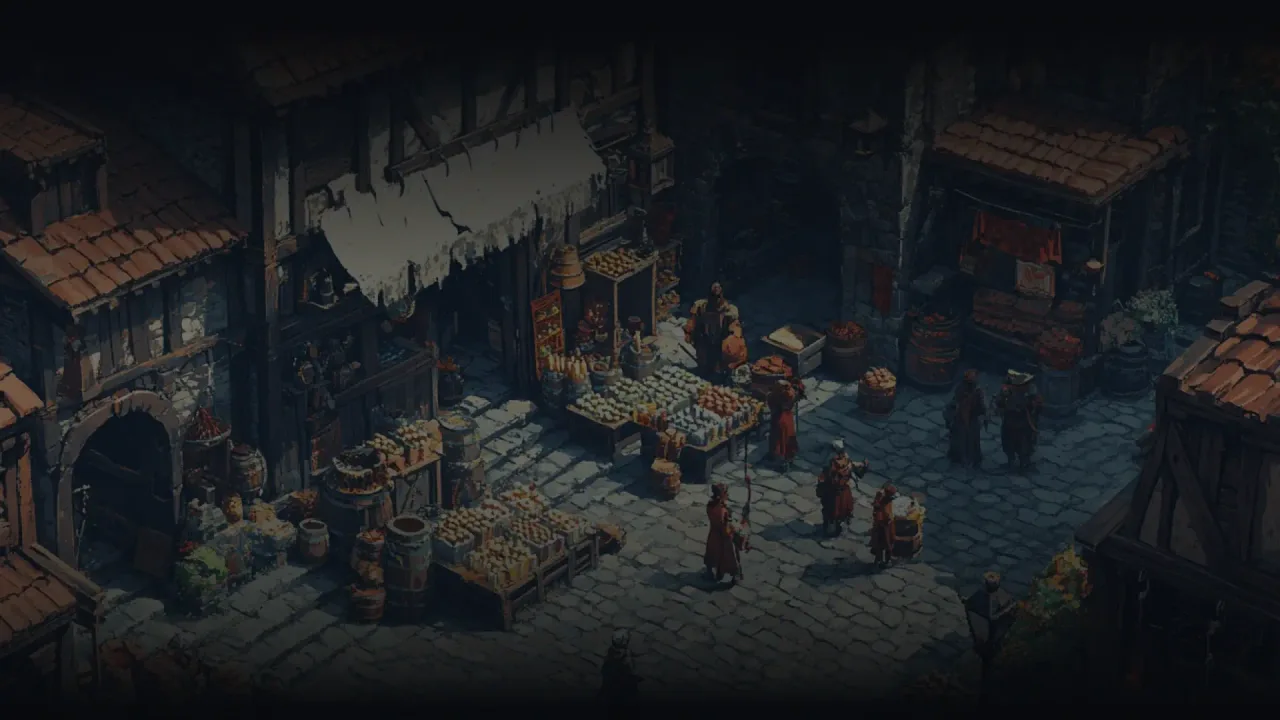
Above all of it sit the Capital, the King's Palace and the Coliseum, the parts of the map where players fight each other rather than the world. It is a tidy piece of design: a floor made of raw material, a ceiling made of contested territory, and a market in the middle where the two finally meet.
There is a particular kind of game that understands time is the real resource, and TerraX is one of them. It runs in a browser tab with no download, hands you two workers and a pickaxe, then mostly gets out of the way while those workers dig. What separates it from the enormous pile of idle games doing something similar is where the output goes. Every ore your crew pulls up is an input into a real economy, priced by other players, settled in USDT, and withdrawable to your own wallet.
The DNA here is older than Web3 and the game knows it. Skill-led progression, the sense that a character is just the sum of what you chose to grind, the way a market of strangers ends up setting the price of everything: that is Old School RuneScape, quite openly. The other half is Ultima Online, the original player-run economy where crafters mattered because somebody had to make the swords and somebody else had to lose them. TerraX takes those two ideas, removes the part where you personally click a rock for nine hours, and puts a stablecoin at the end of the pipeline.
You do not swing the pickaxe in TerraX. Your workers do, and they keep doing it whether you are online, asleep or at work. Mining and harvesting are both fully idle: you assign a worker to a mine floor or a grove, queue an expedition, and collect the stockpile whenever you next log in. Floor one, Surface Works, needs no food and no water, which means the two free workers every account starts with can run indefinitely from day one without you spending anything.
Workers come in five rarities from Common to Legendary, and the gap is not cosmetic. A Common mining worker rolls somewhere between 1 and 4 mining yield. A Legendary rolls between 22 and 35 before bonuses. On top of rarity, every worker rolls a specialisation: Mining at 35 percent, Harvesting at 30, Dungeon at 25, and the rare Versatile roll at 10. Specialists get their primary stats multiplied by 1.5 and their off-spec stats halved, which makes a Dungeon specialist parked in a mine one of the more expensive mistakes a new player can make.
This is the part I keep coming back to. The idle layer is not a timer you watch. It is a staffing problem. You are deciding which of your people go where, which floors are worth the upkeep, and whether the grove producing the log you actually need is worth pulling a worker off ore for. It has the shape of a RuneScape skill plan, just running without you.
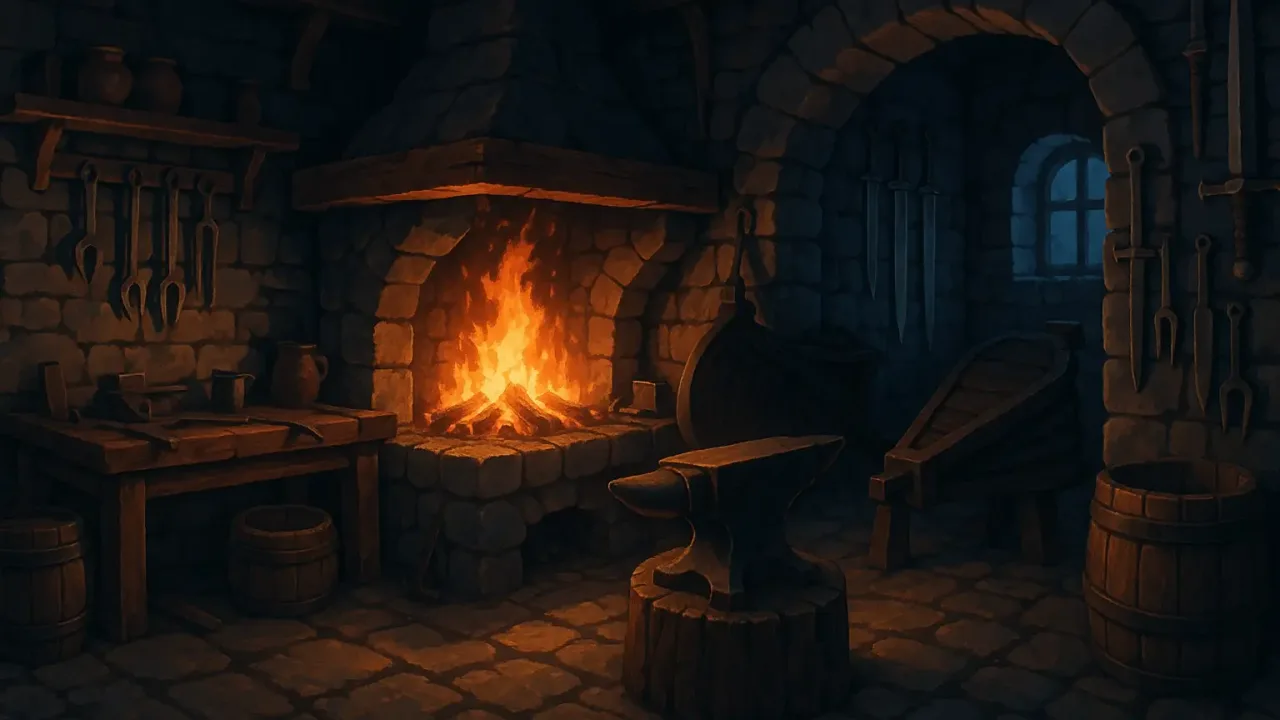
Raw ore is close to worthless. Smelted into ingots it becomes gear, and gear is what people buy. The Forge is the pinch point of the entire economy and the ingot ladder is unusually strict about it. A Copper Ingot wants 175 Copper and 250 Coal and takes six minutes. Iron wants 500 Iron, 750 Coal and 150 Copper across twelve. Silver runs half an hour, Gold a full hour at 1,500 Gold, 2,500 Coal, 400 Silver and 150 Iron. Adamantium takes two hours. At the summit, a single Dragon Glass Ingot consumes 10,000 Dragon Glass, 12,000 Coal, 1,000 Adamantium and 400 Gold over four hours.
Look at what every one of those recipes has in common. Coal. It sits in nearly every smelt in the game, which is why floor one of the mines never stops being useful no matter how deep your operation goes. That is a genuinely elegant piece of economic design: the entry-level resource stays permanently in demand, so a brand new player always has something the veterans want to buy.
Resins are the clearest example of the game forcing its systems to talk to each other. A Low Grade Resin needs 1 Low Grade Sap and 50 Balsa Logs from harvesting, plus 3 Low Grade Fish Oils from fishing. High Grade Resin scales that to 6 High Grade Fish Oils and 100 Blackwood Logs. No single activity produces a resin. Push it further up the chain and Snakewood Planks want 80 Snakewood Logs and 20 High Grade Resins across eight hours, which quietly means three separate gathering systems feed one plank. You either run all three yourself or you buy the gap from someone who does. Either way, somebody gets paid.
You can hold up to five forge slots, so five jobs run at once, and starting one costs 10 energy. The practical effect is that your evening is spent queueing rather than grinding, which is exactly what an idle game should be asking of you.
The marketplace is the reason to take TerraX seriously, and it is worth saying plainly that there is no NPC vendor for anything that matters. Materials, gear, food, fish: all of it is player to player. You list with a price, a quantity and a duration, you pay a listing fee scaled to that duration, and when someone buys, the USDT lands in your balance. If nothing sells, the item comes back to you. You are risking a fee and some time, never the item itself.
What lifts it above the usual auction house is that the market defends itself. Listings are checked against recent trading history, prices far above or below the going rate attract steep extra fees, and enforced floor prices stop a coordinated dump from cratering a material overnight. Cancelling a listing early costs 1 percent, which sounds petty until you realise it is what keeps the order book honest rather than decorative. Nobody can wall the book with fake depth they always intended to pull.
You can watch all of this from outside the game at market.terrax.win, with volume and price history per item. I would encourage anyone weighing the game up to go and look at that page before creating an account, because a live order book tells you more about whether an economy is alive than any amount of marketing does. What you are reading, when you read it, is a genuine supply chain. Whoever supplies a bottleneck sets its price, and the bottlenecks are real: water comes only from fishing, artefacts only from world bosses, dungeon materials only from dungeons.
This is the Ultima Online lesson, learned properly. A crafter who never fights a single monster can run a serious business selling planks and ingredients, and the game is entirely comfortable with that being your whole experience of it.
The world boss is the loudest thing TerraX does, and it is the clearest answer to the question every Web3 game gets asked, which is where the money actually comes from. TerraX routes 30 percent of store revenue back into player reward pools, and the monthly world boss is the largest of them. Everyone on the server can join for 100 energy, everyone deals damage according to their gear and stats, and the pool is distributed by damage contribution. The top three dealers take 20, 15 and 10 percent of the pool, and the remainder is spread across everyone who turned up and swung.
That 100 energy entry is the part I like. It is low enough that a mid-strength account can show up, contribute honestly and take a share, rather than the whole pot vanishing into the top ten accounts. Bosses also drop rare artefacts used in legendary crafting, and since artefacts have no other source in the game, they feed straight back into the marketplace at whatever price the crafters are willing to pay.
The money players spend in the store becomes, in part, the money players win in the arena. It is a closed and legible loop, and being able to describe it in one sentence is not something most games in this category manage.
Fishing is a full gathering system rather than a minigame bolted on. There are 36 species across pools running from the Riverlands out to the deep trenches, and your rod rarity gates which tiers can appear at all, exactly the way your pickaxe gates ore. Each cast costs energy and bait, rods take durability damage, and landing a fish needs a timing input rather than a single click. Catches feed cooking, cooking produces the buffs you want before a mining session or a boss fight, and the surplus goes on the market.
Competitive fishing is where it turns into a scene. Two leaderboards run at all times: an all-time board ranked by the single heaviest fish you have ever landed, and a weekly board that rotates its focus so different species and goals take the spotlight. On top of those sit fishing tournaments, entry-fee events that typically cost 20 USDT to join, with the prize pool paid out across the final standings. If you have invested in rods and you know which pools hold what, fishing tournaments turn angling skill directly into income on a schedule you can plan your week around.
The wider calendar keeps the same rhythm. Guilds that hold the Capital through the monthly war window earn a share of 10 percent of all game revenue, which turns guild membership into an economic alliance rather than a chat channel. Seasonal events run on the real calendar, with an Easter egg hunt and a Christmas event among them. Underneath it all are the small daily hooks: a free Wheel of Fortune spin, escalating login streak rewards, and Lokir's Wellspring, a daily jackpot fed by 10 percent of revenue that anyone can enter free once a day.
TerraX is a centralised platform and says so directly. The team keeps control of the game systems so they can patch and balance quickly. If you came looking for a fully on-chain game where the rules live in a contract nobody can change, this is not that, and you should know it going in.
The fee schedule is worth reading before you commit. USDT deposits are free, other token deposits carry 6 percent, and withdrawals cost 5 percent with 2 percent permanently burned. Workers arrive through packs with published odds and a pity system, which is a gacha by any other name, though the two free starters genuinely are enough to build from and plenty of players never spend anything.
The thing it gets right, and the reason it sits where it does on this list, is that there is no game token. No pre-sale, no chart to watch, no praying that a bespoke coin holds its value against your playtime. You earn USDT and you withdraw USDT. Removing the speculative layer is the single most player-friendly decision available to a game in this category, and remarkably few of them take it. Nothing here is financial advice, and we do not report asset prices anywhere on this site.
TerraX is the best argument I have seen that idle games and Web3 belong together. The idle loop solves the problem that killed most play-to-earn titles, which is that nobody wants a second job. Here the grind runs without you, and what you actually do when you log in is make decisions: staff the floors, queue the Forge, price the listings, show up for the boss.
It asks for a wallet and it asks for patience, and its first hour will not sell anyone on it. Give it a week of check-ins and what emerges is the thing RuneScape and Ultima Online both worked out decades ago. The world is only interesting because other people are in it, and the market is the most honest conversation any of them are having.

All external links open in a new tab. We link to official destinations only and never to anything that prices an asset.
TerraX sits in our best idle games ranking at position 1.
Similar games
Picked for overlap with TerraX, same genre, comparable systems, or the same reason to play.
15
Idle RPGBrowserPCMobileBuy to play2021
RuneScape's skill list, rebuilt as an idle game, and better for it.

02
MMORPGPCMobileFree to play2013
A 2007 MMORPG that the players themselves refuse to let die.

08
Space sandbox MMOPCFree to play2003
One server, one universe, and an economy nobody is in charge of.
19
Sandbox MMORPGPCMobileFree to play2017
A classless sandbox MMO where the gear you lose was made by someone.
More to play

30
IncrementalBrowserPCFree2013
The joke that accidentally invented a genre and then took it seriously.

31
IncrementalBrowserMobileFree2017
An incremental game with an argument, and an ending.